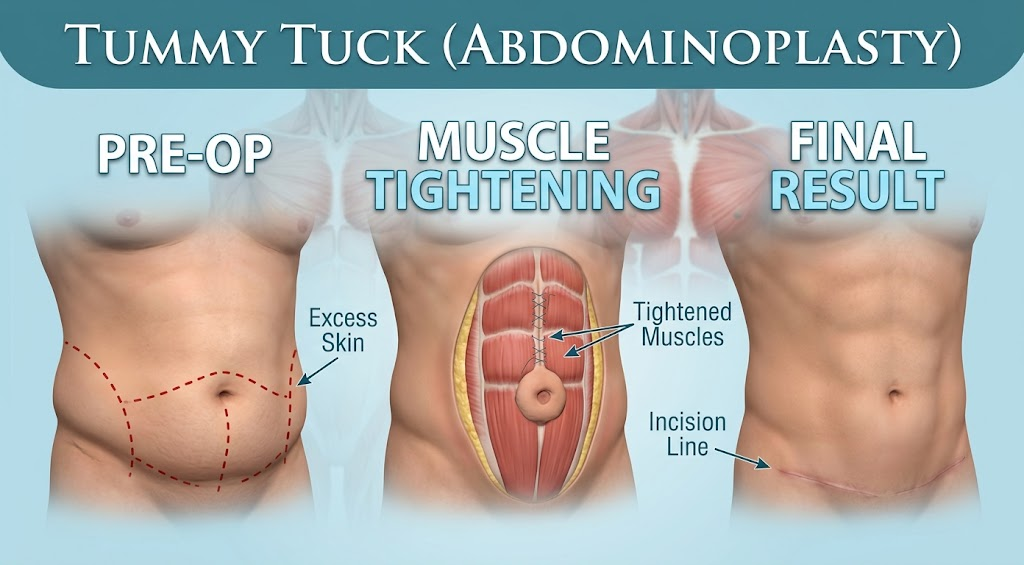
A tummy tuck, medically known as abdominoplasty, is a cosmetic surgical procedure designed to improve the shape and firmness of the abdomen. It can remove excess skin and fat while tightening weakened or separated abdominal muscles. Although many people consider it after significant weight loss, pregnancy, or aging, it is not a substitute for weight loss or a healthy lifestyle.
Understanding the Procedure
During a tummy tuck, a qualified plastic surgeon makes an incision across the lower abdomen, usually positioned so that it can be concealed beneath underwear or swimwear. Excess skin is removed, and the abdominal wall may be tightened to create a smoother, firmer contour. In some cases, the belly button is repositioned to maintain a natural appearance.
The exact technique depends on the amount of loose skin, muscle separation, and overall body shape. A full abdominoplasty generally addresses the upper and lower abdomen, while a mini tummy tuck focuses mainly on the area below the navel. Your surgeon can recommend the most suitable approach after an examination.
Who May Consider Tummy Tuck?
Adults who have stable body weight and realistic expectations may be candidates for abdominoplasty. It can be particularly useful for people with loose abdominal skin that does not respond to exercise or dieting. Pregnancy can stretch the abdominal wall and leave excess skin, while major weight loss can produce similar changes.
Good candidates should generally be healthy enough for surgery and willing to follow recovery instructions. People planning significant future weight loss or pregnancy may be advised to postpone the procedure. A personal consultation is essential because medical history, medications, smoking, and previous abdominal operations can affect suitability and surgical planning.
Potential Benefits
The main benefit is a flatter and more defined abdominal appearance. Removing stretched skin can improve the way clothing fits and may make the abdomen appear more proportionate to the rest of the body. When separated muscles are repaired, the abdominal wall can also feel firmer and more supported.
Some patients experience improved confidence after surgery because their abdominal contour better matches their expectations. However, results vary, and the procedure cannot guarantee a particular appearance. Maintaining a stable weight and healthy habits can help preserve the surgical outcome over time.
Preparing for Surgery
Preparation begins with a detailed consultation. Your surgeon will review your health history, examine the abdomen, discuss your goals, and explain the expected scar placement. You may be asked to provide information about medications, supplements, allergies, previous surgeries, and smoking or nicotine use.
Before surgery, follow all instructions carefully. Your surgeon may advise adjusting certain medications, avoiding nicotine, arranging transportation, and preparing a comfortable recovery area at home. You should also plan for help with daily activities during the first part of recovery, particularly if you have children or physically demanding responsibilities.
Recovery and Aftercare
Recovery differs from person to person, but most patients need several weeks before returning fully to normal activities. Swelling, bruising, tightness, and temporary discomfort are common during the early period. Your surgeon may recommend a compression garment and specific wound-care instructions to support healing.
Walking gently is often encouraged soon after surgery to support circulation, but strenuous exercise, heavy lifting, and intense abdominal movements should be avoided until your surgeon gives clearance. Follow-up appointments allow the surgical team to monitor healing and address concerns. Scars usually fade gradually, although they remain permanent.
Risks and Possible Complications
Like any major surgery, abdominoplasty carries risks. Possible complications include infection, bleeding, fluid accumulation, poor wound healing, numbness, changes in skin sensation, unfavorable scarring, and blood clots. Rarely, additional surgery may be necessary to address a complication or improve an unsatisfactory result.
Choosing a qualified, experienced plastic surgeon and an accredited surgical facility can reduce avoidable risks, but no operation is completely risk-free. Make sure you understand the benefits, limitations, alternatives, and potential complications before giving consent.
Tummy Tuck Versus Liposuction
A tummy tuck and liposuction address different concerns. Liposuction primarily removes localized deposits of fat, whereas abdominoplasty focuses on excess skin and, when needed, abdominal muscle laxity. Some patients have both concerns and may be candidates for combined procedures.
Neither treatment is a replacement for healthy weight management. If skin quality is good and the main concern is stubborn fat, liposuction may be considered. If loose skin and muscle separation are significant, a tummy tuck may provide a more comprehensive contouring result.
Scarring and Long-Term Results
Scarring is an important consideration. The incision is generally placed low on the abdomen, but its length varies according to the surgical technique and amount of skin being removed. Proper aftercare can support healing, while factors such as genetics, skin type, nicotine exposure, and wound complications can influence how scars develop.
Results can be long-lasting when a person maintains a relatively stable weight. However, future pregnancy or substantial weight changes can stretch the abdominal tissues again. Aging also continues naturally, so the abdomen will change over time even after successful surgery.
Choosing the Right Surgeon
Selecting the surgeon is one of the most important decisions. Look for a properly qualified plastic surgeon with substantial experience performing abdominoplasty and a clear approach to patient safety. Review before-and-after photographs when available, but remember that every body is different and results cannot be guaranteed.
During consultation, ask who will perform the operation, where it will take place, what type of anesthesia will be used, what recovery support is provided, and how complications are handled. A trustworthy surgeon should welcome questions and explain the procedure without pressuring you to proceed.
Cost Considerations
The cost of a tummy tuck varies according to the surgeon’s experience, surgical facility, anesthesia, technique, geographic location, and individual needs. A quoted surgical fee may not include every expense, so ask for a complete breakdown before making a decision.
Cosmetic abdominoplasty is often not covered by insurance because it is generally considered elective. However, coverage rules differ, and procedures performed for specific medical reasons may be treated differently. Never choose a surgeon based solely on the lowest price.
What to Expect on the Day
On the day of surgery, the medical team will review the planned procedure and confirm important details before anesthesia is administered. The operation may take several hours depending on the technique and whether other procedures are performed. Afterward, you will spend time in a monitored recovery area while the effects of anesthesia wear off.
You may leave the facility the same day in selected cases, while some patients require overnight observation. Before going home, you should receive instructions about medications, dressings, activity, warning signs, and follow-up visits. Having a responsible adult available to assist you is important during recovery.
Lifestyle After Surgery
Healing does not end when the incision closes. Gradually returning to nutritious eating, regular movement, and appropriate exercise can help support your long-term result. Avoid judging the result too quickly because swelling takes time to resolve. Changes become clearer over several weeks and months, so patience is important.
Is It Right for You?
A tummy tuck can create a smoother abdominal contour and remove skin that has become resistant to lifestyle changes. It can be a valuable option for carefully selected patients, but it is still major surgery and requires thoughtful preparation.
The best decision comes from an individual assessment rather than online comparisons. Discuss your goals, medical history, expectations, recovery needs, and alternatives with a qualified plastic surgeon. With realistic expectations and appropriate care, abdominoplasty can help some patients achieve a firmer, more balanced abdominal appearance.